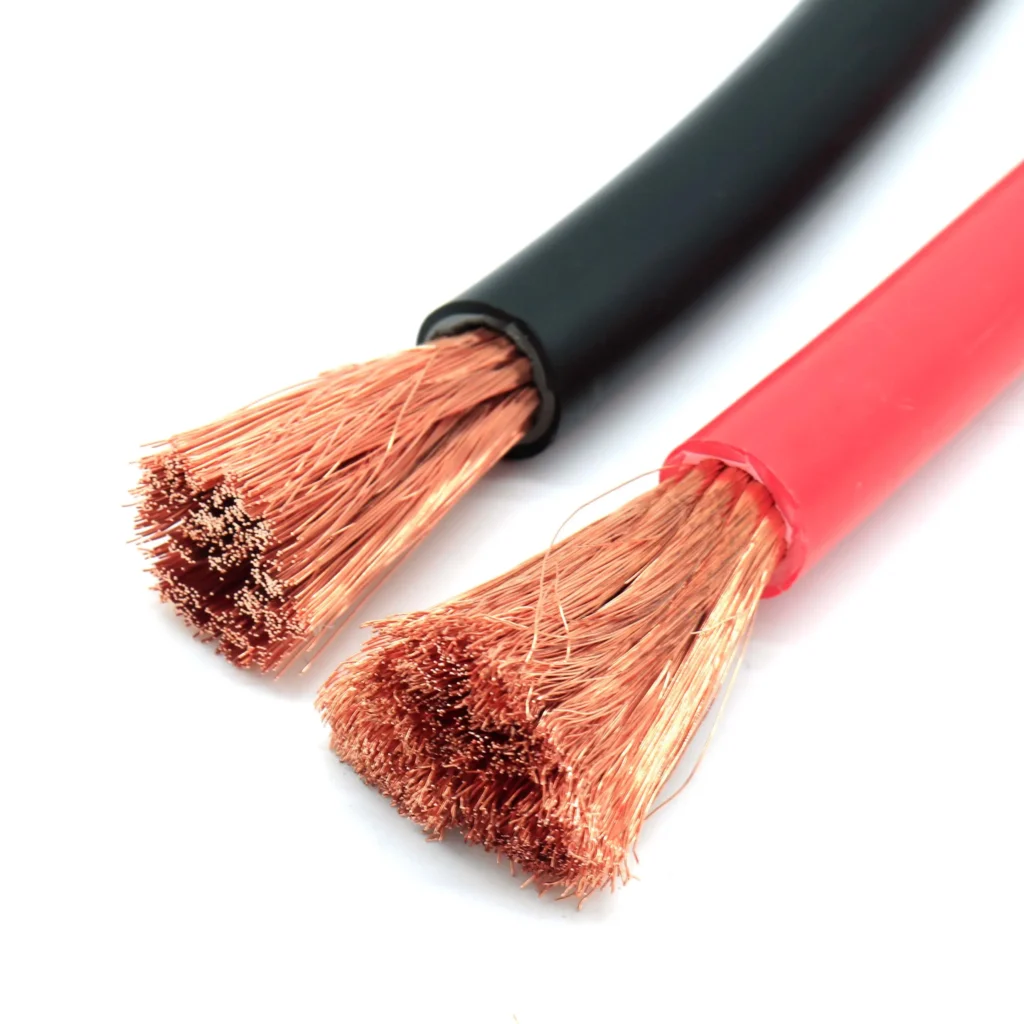
The core misunderstanding in the selection of Bare Copper Welding Battery Power Cable
Choosing overly large specifications blindly wastes costs. Selecting too small specifications may cause overheating and damage. Especially in the welding scenario, if the specifications do not match, it will lead to unstable welding and unstable power supply. If you want to know which type of Bare Copper Welding Battery Power Cable the best fit for you, please contact us immediately.
Core Misunderstandings in Choosing Bare Copper Welding Battery Power Cables:
Understand AWG Specifications
| AWG Specification | Wire Diameter (mm) | Current-Carrying Capacity (A) | Suitable Scenarios |
|---|---|---|---|
| 1/0 AWG | 8.25 | 200-285 | Small solar energy storage, ordinary car batteries (medium and short distance) |
| 2/0 AWG | 9.27 | 285-350 | Large cars, ship auxiliary batteries (medium and short distance) |
| 4/0 AWG | 11.68 | 350-500 | Large energy storage systems, ship main batteries (long distance, high current) |
Welding Battery Cable Applications by Spec
- 1 awg battery cable: Perfect for small to medium current scenarios. It’s great for small solar energy storage systems, ordinary car batteries (like family cars), and medium-short distance DC battery welding. It’s cost-effective and easy to solder—ideal for daily use.
- 2 awg battery cable: Suitable for medium to high current scenarios. It fits large cars (such as trucks, engineering vehicles), ship auxiliary batteries, and medium-short distance welding. It balances performance and cost, widely used in industrial and automotive fields.
- 4 awg battery cable: Designed for high-current and long-distance scenarios. It’s used for large energy storage systems, ship main batteries, heavy equipment (like generators), and long-distance DC power transmission. It’s stable and durable, perfect for heavy-duty use.
The advantages of pure copper material


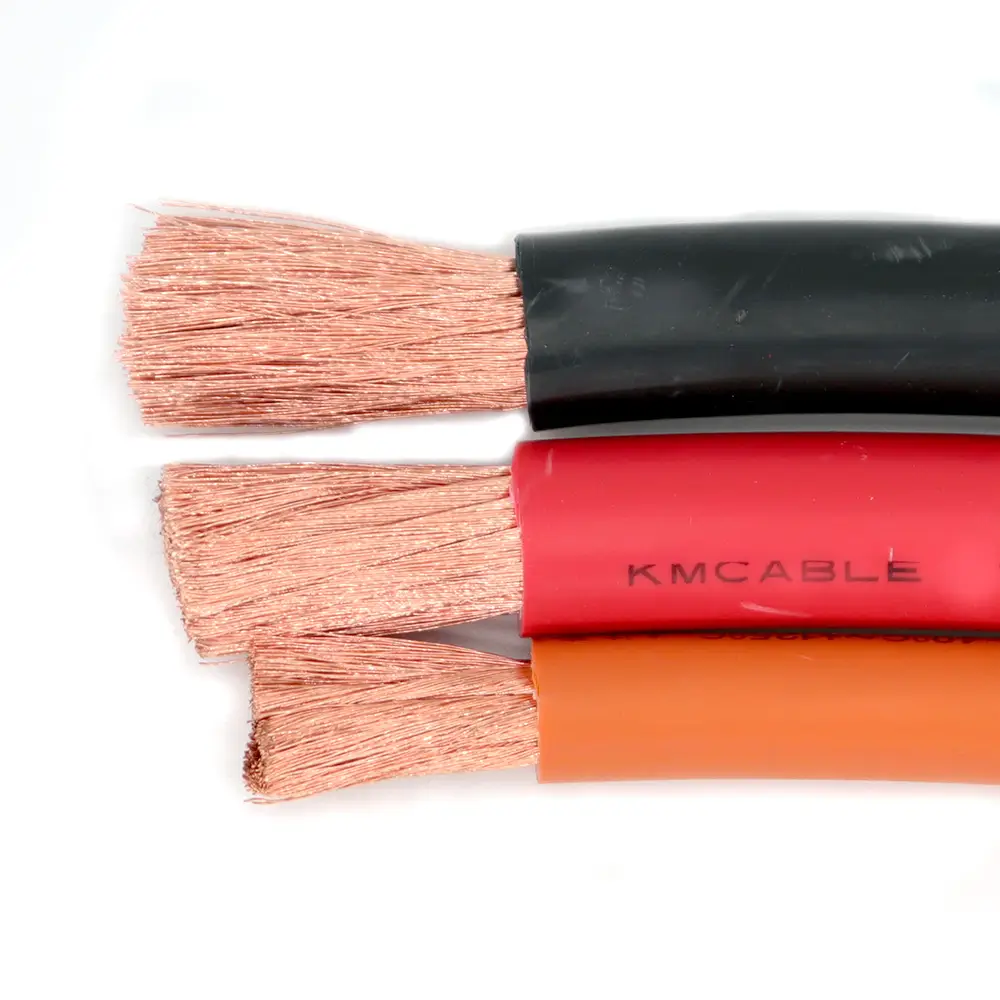
Difference Between Pure Copper and Copper-Clad Aluminum (CCA)
- Conductivity: Pure copper conducts electricity much better than CCA. It has lower resistance, so power transmission is more stable—super important for DC battery welding.
- Weldability: Pure copper is easy to solder, won’t easily have cold welding, and the joint is firm. CCA is harder to solder and tends to have poor welding quality.
- Durability: Pure copper is more anti-oxidation and lasts longer. CCA is prone to oxidation, especially in complex scenarios like ships or outdoor use.
- Cost-Effectiveness: Pure copper is more cost-effective in the long run—no need to replace cables frequently. CCA is cheaper at first but not durable.
About us
Kmcable Group Co., Ltd. specializes in high-performance specialty cables, offering products like Bare Copper Welding Battery Power Cable. With 2800 m² facilities and over 90 employees, the company provides customized cables for global industries. ISO9001, ISO14001, and CE certifications ensure quality and environmental compliance. Advanced production capabilities and 20 years of experience support reliable, durable solutions for diverse applications.